

Introduction
Metal injection molding occupies a position in the manufacturing landscape that is easy to overlook until the problem it solves becomes unavoidable. When a component requires the mechanical performance of a structural metal alloy, the geometric complexity of an injection moulded part, and the production economics of a high-volume process, the list of viable manufacturing routes shortens considerably. Metal injection moulding is, for a well-defined class of components, the most technically and economically defensible option available. Understanding why requires following the process from its starting materials through to a finished, sintered component, and examining the industries that have adopted it as a preferred production route.
What Metal Injection Molding Is
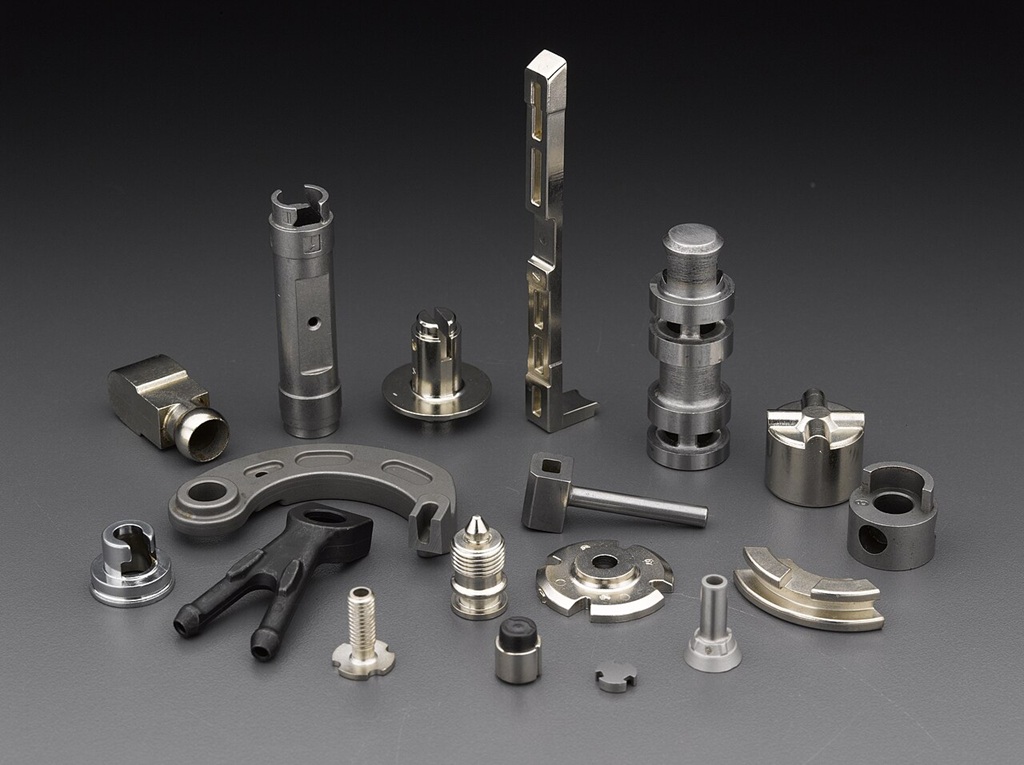
Metal injection moulding is a net-shape manufacturing process that combines the shaping freedom of plastic injection moulding with the material properties of fully dense metal alloys. The process converts a mixture of fine metal powder and an organic binder into complex three-dimensional components through a sequence of injection moulding, binder removal, and high-temperature sintering.
The result is a metal component produced to near-net shape, with mechanical properties comparable to wrought or cast equivalents, and a geometry that pressing, casting, or machining could not produce at equivalent cost or consistency. The process is most economically compelling for components in the one gram to one hundred gram range, produced at volumes that justify the upfront tooling investment.
The Process: Stage by Stage
Feedstock Preparation
The process begins with feedstock: a homogeneous mixture of metal powder and an organic binder system. Metal powder particle size, typically below 20 micrometres, is selected for its sintering behaviour and the mechanical properties required in the finished component. The binder system provides the flow characteristics needed to carry the powder through the injection moulding process. Common binder formulations include paraffin wax, polyethylene, and polyoxymethylene-based systems, each with distinct processing profiles and debinding routes.
Injection Moulding
The feedstock is processed on machinery closely related to standard plastic injection moulding equipment, modified to accommodate the higher density and abrasive character of metal-loaded material. The feedstock is heated until the binder softens sufficiently to flow under injection pressure, filling the mould cavity to produce a green part. That green part is dimensionally larger than the intended finished component by the amount of sintering shrinkage to be compensated.
Tooling design must account for shrinkage, typically between 15 and 20 percent in linear dimensions, as well as gate location, parting line placement, and ejection system design. Every tooling decision must be made with the sintered final geometry as the reference.
Debinding
Debinding removes the organic binder from the green part, leaving a porous metal powder structure known as the brown part. Three debinding routes are in common industrial use:
- Thermal debinding: A controlled heating profile volatilises the binder progressively without generating internal pressure sufficient to crack the part
- Solvent debinding: Immersion in a solvent dissolves the primary binder component, leaving a secondary binder to maintain structural integrity
- Catalytic debinding: Exposure to a catalytic atmosphere converts polyoxymethylene-based binders to gaseous byproducts at comparatively low temperatures, reducing cycle time and residual carbon content
Sintering
Sintering is where metal injection moulding delivers its defining material performance. The brown part is heated in a controlled atmosphere furnace to temperatures approaching the melting point of the alloy, typically between 1,200 and 1,450 degrees Celsius depending on the material. Metal particles bond across their contact surfaces, porosity collapses, and the component densifies to between 96 and 99 percent of theoretical density. Mechanical properties including tensile strength, hardness, and fatigue resistance are comparable to wrought or cast equivalents, distinguishing metal injection moulding from conventional powder metallurgy pressing, which yields lower-density, lower-strength parts.
Materials Processed by Metal Injection Molding
The range of alloys accessible to metal injection moulding is broad. Commonly processed materials include:
- Stainless steels: 316L and 17-4PH grades are widely used in medical device and food processing applications where corrosion resistance is critical
- Low-alloy steels: Used in firearms components, automotive parts, and industrial hardware where high strength and hardness are required
- Titanium alloys: Increasingly viable through advances in furnace atmosphere control, offering strength-to-weight performance for medical implants and aerospace components
- Cobalt-chrome alloys: Valued for hardness, wear resistance, and biocompatibility in dental and orthopaedic applications
- Tungsten-based alloys: Used in radiation shielding, counterweights, and thermal management components where high density is the primary requirement
Typical Applications
Metal injection moulding has found its most consistent adoption in industries where component complexity, material performance, and production volume converge within the process window.
Medical device manufacturing relies on metal injection moulded components for surgical instrument parts, endoscopic components, and implantable device elements where biocompatible alloys must be produced to tight tolerances at volume. Singapore’s metal injection moulding sector has developed particular depth in this application domain, supported by cleanroom assembly infrastructure and quality management systems aligned to ISO 13485 requirements.
Firearms manufacturing has been among the historically significant adopters of metal injection moulding, producing trigger components, hammer parts, and safety mechanisms where the geometric complexity of functional firearm components justifies the process economics at the production volumes involved.
Consumer electronics applications include hinge mechanisms, structural brackets, and connector components in portable devices where high strength, complex geometry, and tight dimensional tolerances must be achieved at the scale of global product programmes.
Automotive and industrial applications extend to fuel system components, turbocharger parts, and precision gears where the combination of material density and geometric capability that metal injection moulding provides cannot be matched by alternative forming processes at comparable cost.
Conclusion
From feedstock preparation through to a sintered, near-net-shape component ready for use in a demanding application, metal injection molding is a process that rewards careful engineering and delivers material performance that few alternative manufacturing routes can match within its optimal production window. For designers and engineers working with components that combine geometric complexity, structural metal properties, and volume production requirements, metal injection molding offers a proven and well-characterised route to parts that would otherwise require compromises in design, material, or economics.